

An ongoing series of technical cheat sheets.
Some are video lessons, others PDFs on technical elements as diverse as glazing, color mixing, block-ins, extenders, the pochade, octavol vs. dynamic canvas sizes, etc., etc.
Check back here regularly, or better yet, subscribe to my PORTRAIT PAINTER Magazine.
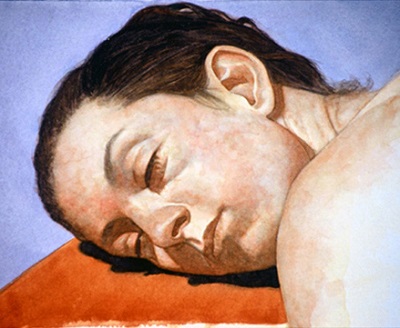
The Practice of Glazing
Glazing is a wonderful thing—until it isn’t.
Watercolor painting is predicated on glazing techniques. Broad washes of color interplayed with succinct articulations of shape. Alternating warm-over-cool is a good rule of thumb.
Glazing with oil paint requires a sound strategy. And a dose of science. In oil painting discrete glazes can deepen the darkest tones to render a greater stretch of light to dark. Giving the painting more Ooomph! But a poorly applied glaze can irrevocably ruin a painting.
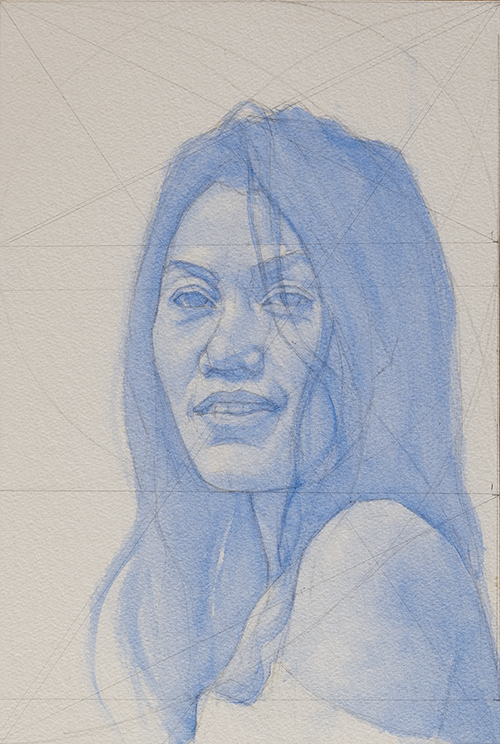
Watercolor demands a strategy of careful balancing of color interactions, otherwise it collapses into a muddy heap. I begin my watercolor portraits with a cool cobalt blue initiation. From there the game is on! It is a courtship of water and delicate tones.


Striking the Arabesque
In practically every issue of PORTRAIT PAINTER Magazine I have stressed the importance of striking shape. It is within the big shape that the likeness, character and composition of the painting is established. Yet hardly anyone teaches how to do that.
In this 23+ minutes streaming video (4K) I will teach you to strike the big shape. Admittedly it's not an easy exercise. Likely you will have to spend a week on it. In other words ... do the work. The dividend of acquiring this all-important skill of striking is manifold.
All you need for this lesson is drawing paper (newsprint is fine), a soft (8B) pencil or charcoal or conte, and a thin stick or knitting needle for checking your measures. And an eraser. Most definitely an eraser.
Download your reference (Edgar Degas, Portrait of a Young Woman, 1867) and print full size at 22 x 27 cm. Those are the dimensions of the original painting. You'll be striking at the exact same size as your reference. That's important.

If you find that this exercise is beyond your ability then take advantage of my two-week free trial of PORTRAIT PAINTER TV and study Module 1: Shape & Proportion. That's your foundation.
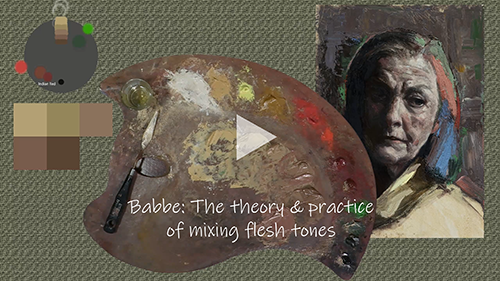
The Practice of Mixing Flesh Tones - A primer for beginners
Generally, beginning painters should spend as much time mixing their flesh tones as they would actually painting.
Get those initial flesh tones wrong and everything falls apart. The common issue confronting the beginning painter is chalking out. Too much white.
This 32 minute streaming video is a structured guide to effectively mixing basic flesh tones.
The accompanying PDF rounds out your foundational understanding of how to mix flesh tones with color theory as it pertains to the qualities of flesh.
........
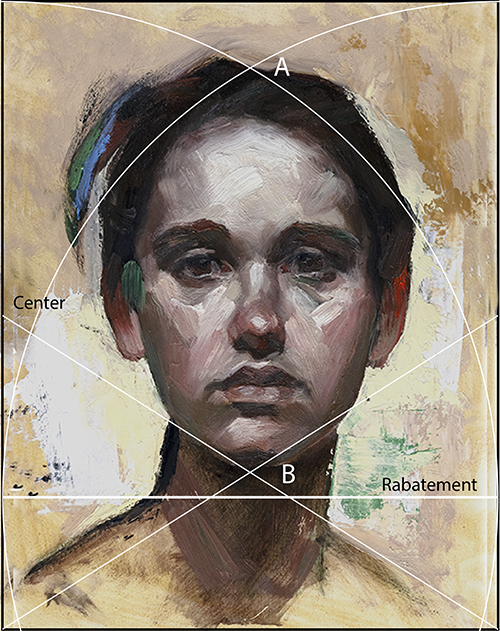
The readily available 11x14" canvas is a dynamic rectangle well-suited for alla prima portraits and tronies (character studies).
Finding the Edge
Drawing, color and composition expressed as a unified whole determines a painting's success.
It begins with your choice of canvas size. The ever popular 16x20" canvas, sullying the supply lists of far too many painting classes and workshops, dooms your painting to failure before that first brush stroke is applied. It is a static canvas. Dead on arrival. Kaput!
In this issue of Tech-Sketches: Finding the Edge I'll show you an elegant method of placing the head within the 11x14" dynamic canvas that takes a big step forward to Unity and giving it that extra Oomph!
From there it's a matter of striking the arabesque, serving up the half-tones in the abstract and pulling out the portrait with succinct bravura brush strokes.
That was the teaching process of John Singer Sargent.
It's also the teaching process in my PORTRAIT PAINTER TV taking the absolute beginner step-by-step to mastery.
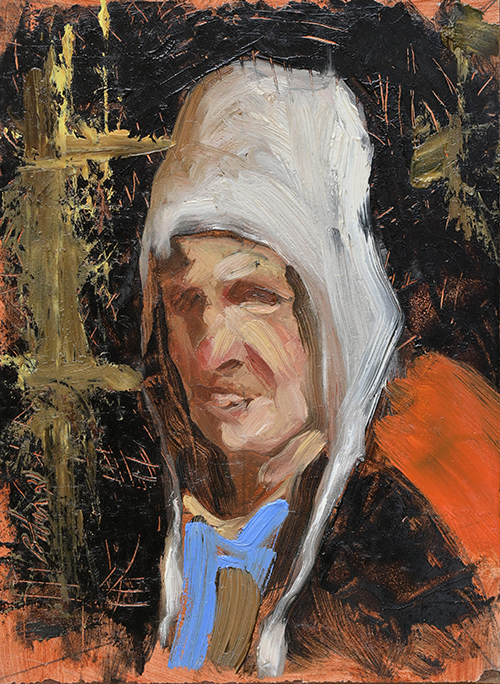
The Pochade
A pochade’s purpose is to clarify the elements that comprise the layer-cake of a painting: the pictorial divisions of space (including the canvas size of the intended painting); the notan (light/dark harmony); color harmony; and the figure/ground relationship.
The pochade also gives an idea of what the intended painting will look like from across a large room or gallery. Does it have Ooomph!?
Get this issue of Tech-Sketches: The Pochade.
Color Effect
Color is the prime material of painting. It ranks amongst the topmost heirarchy of what makes a good painting.
In this issue of Painter’s Tech-Sketches I discuss two important tools of color. The first is Contrast of Saturation. A full saturated hue is enlivened by the tonal contrast around it. This fundamental concept both enlivens and creates spatial depth.
The purer the hue, the more it advances.
Get this issue of Tech-Sketches: Color Effect.
xxxxxxxx
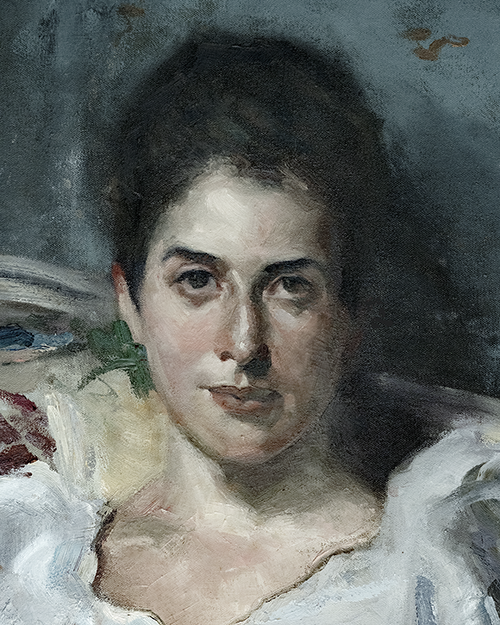
We engage paintings viscerally. Technical spectacles are like a magician’s trick. At first they awe. But once you know the sleight of hand the wonderment fades.
John Singer Sargent's Lady Agnew of Lochnaw. The Workshop
Earlier this summer I conducted a 20-session workshop featuring John Singer Sargent's Lady Agnew of Lochnaw, 1892, aka Gertrude Vernon, the quintessential late Victorian party girl, in Manila, Philippines.
Our paintings were the same size as the original: 40 x 50". There is much to gain—a multitude of lessons to be learned—in painting a master work at it's original dimensions.
Our loaded brushes held out with arms extended, our heads cocked back, and our eyes fallen slightly out-of-focus the large masses of the gesture are struck.
There is no pre-measuring. Except for placing the top of the head. We, like Sargent, are working sight-size. Our paintings are slightly below life size. Just as with the original.
xxxxxxxx
Two Keys to Successful Portrait Painting
Of the myriad ways of drawing and painting the portrait there are two keys present throughout: shape recognition and anatomy. They work hand-in-hand.
Painting is essentially a compendium of arranged colored shapes. The viewer's eye interprets colored shape into concrete form, i.e., an eye or a mouth.
That seems easy enough.
Get this issue of Tech-Sketches: Two Keys to Successful Portrait Painting.
For the serious portrait painter ...
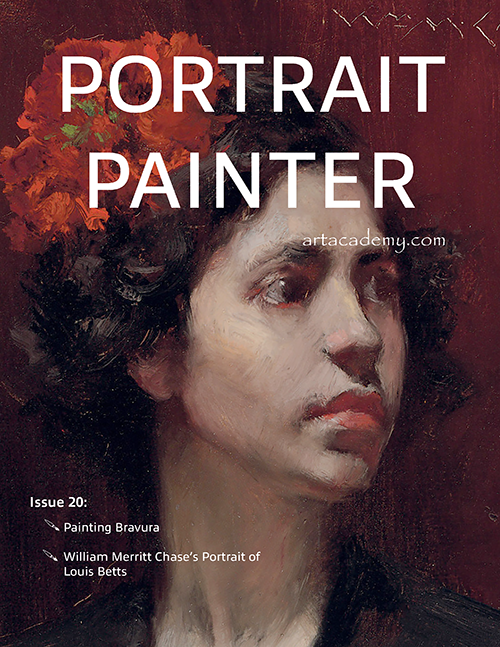
Featuring the technical nuts & bolts of painting portraits in oil. Whether you are a beginner unsure of how to begin a portrait or a seasoned painter looking to push your painting to the next level the needs of the serious painter are addressed.
And PORTRAIT PAINTER is free!
... you don't need to subscribe, but why risk missing an issue?
'Oh how I look forward to your monthly issues! This one is definitely not for the faint of heart or to leisurely view with morning tea. I will come back to it though and devour every line and image! Thank you for your knowledge and gift of writing. I so enjoy it!'
Nancy